

The estate's vineyards are located in the villages of Vouvray and Noizay, along the slopes bordering the Loire river. The terroirs are mainly clay-limestone and date from the Upper Cretaceous (-99.6 to -65.5 million years ago) and the Miocene (-23 to -5 million years ago). It includes :
The estate's vines are cultivated according to the principles of the Organic Agriculture, but in the absence of Ecocert certification, we cannot classify the wines as organic. The old Chenin vines that give birth to the LA GRANDE GRIVE cuvée are about 80 years old, and their very low yield of 25 hl/ha produces a dense and fragrant wine.
The grapes are harvested by hand and then taken to the estate's troglodyte cellars where they are pressed before being vatted for a cold settling operation.
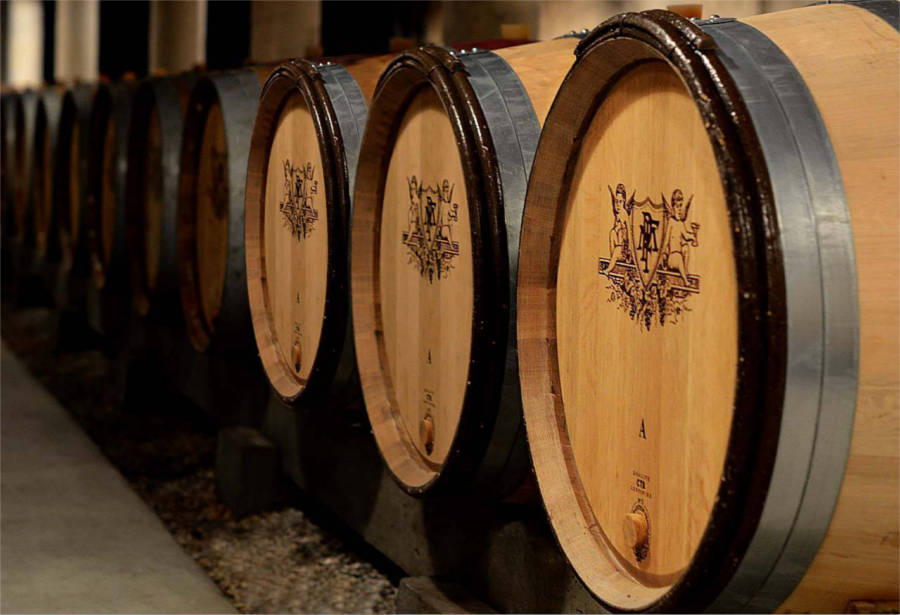
Once the coarser lees have been removed, the must is then transferred to old 300 litre barrels (between 2 and 3 wines). The alcoholic fermentation takes place spontaneously in the presence of the native yeasts, followed by the malolactic fermentation, which takes place at around 70% during the 9 months of maturation.
Once the maturation is complete, the musts are blended and filtered before bottling, which is made in the summer following the harvest.
| Country | Loire Valley |
| Color | White |
| Orange wines | No |
| Clay amphorae wines | No |
| Type | Dry |
| Vintage | 2021 |
| Capacity | 75 cl |
| Single Grape Variety | Chenin |
| Alcohol rate | 14 % |
| Quality Designation | Vouvray |
| Cellar Potential | 10 ans |
| Service advise | 11°C (52°F). Open 1/4hr before the service. |
| Culture Methods | Non-certified Organic culture |
| Total SO2 | 50 mg/l |
| Fining | No |
| Filtering | Yes |
| Comments | Native yeasts ♦ Fermentations in 300-liter oak barrels ♦ Filtration before bottling. |
| Stopper | Natural cork |

Specialized in amphora wines, we offer you a selection of the best white, red and rosé wines vinified in amphorae.
You will find vintages:
- fermented and aged in clay amphorae
- fermented in traditional tanks and aged in clay amphorae
- partially aged in clay amphorae...
...not to mention the rare wines vinified entirely in Qvevris!

 English
  Français